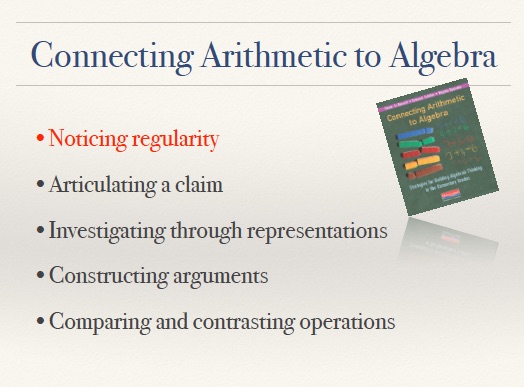
A few weeks ago, I planned a lesson with one of our Kindergarten teachers, Linda. The beginning planning stages and readings behind this lesson are described in this previous post. Based on the work she had been doing with dot image number talks, she was seeing students combining addends to arrive at a sum and also writing equations to match their thinking. After reading the NCTM article, she was curious to see how students would think about the addends when they weren’t right in front of them, as they were with the dots. Also, since we have been reading Connecting Arithmetic to Algebra recently, a lot of our work has been thinking about how students make conjectures and prove claims. This would also be before their Investigations activity called Toss the Chips so I was really interested to see if the movement of bunnies gave a different visual for students than flipping the chips over to different colors?
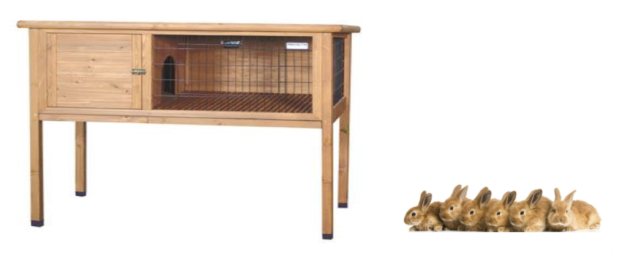
We posed the image of the bunny cage and 6 bunnies (in my previous post) and did a quick noticing. After noticing the bunny ears and explaining how we need to take really good care of them, the class noticed some really important things around the math: there were 6 bunnies (we counted to be sure), the cage had an inside and outside part, and there was a door for them to go inside and outside.
We explained that with their partner, they were going to see how many different ways these bunnies could be in the cage. Then I asked,”Since we don’t have the bunnies here with us, what could we use instead to help us?” After a suggestion of building a bunny, a couple students suggested the connecting cubes they had on the shelf, perfect. Each pair took their cubes, paper, and pencil and went to work. We purposely didn’t tell them or model how to show or organize their work because we were curious to see how they would do it on their own.
Things I noticed as I circulated:
- There were so many amazing ways students organized their information!
- A lot of partners started with 3 and 3.
- The commutative property was not showing itself at all, so possibly they saw 4 and 2 the same as 2 and 4?
- Many partners were moving the cubes as if they were the bunnies to start a really cool pattern but stopping when they got to 6 and 0.
Here are some pieces of work that I thought highlighted my noticings:
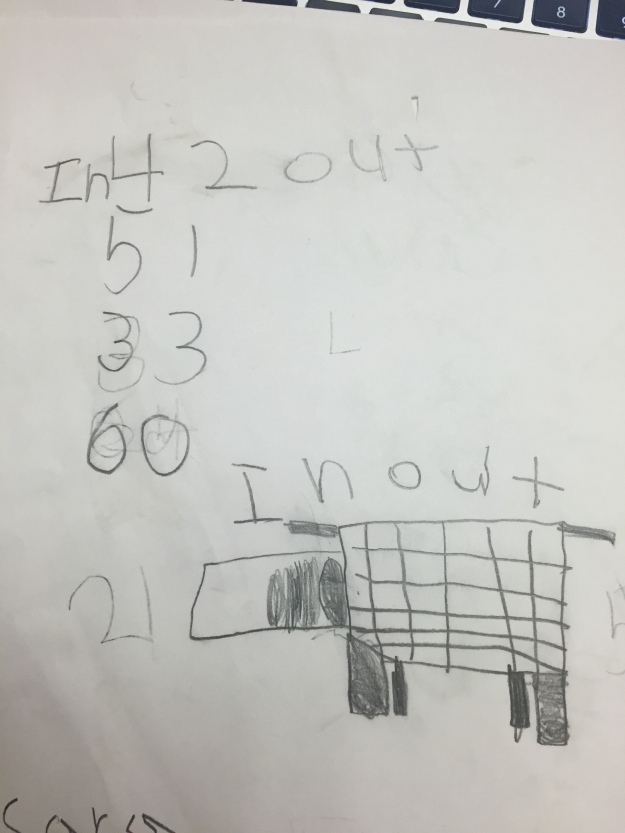
This one looked like they were going in a particular order but then jumped to 3 and 3. I loved the labeling on both the drawing and the list! So clear!
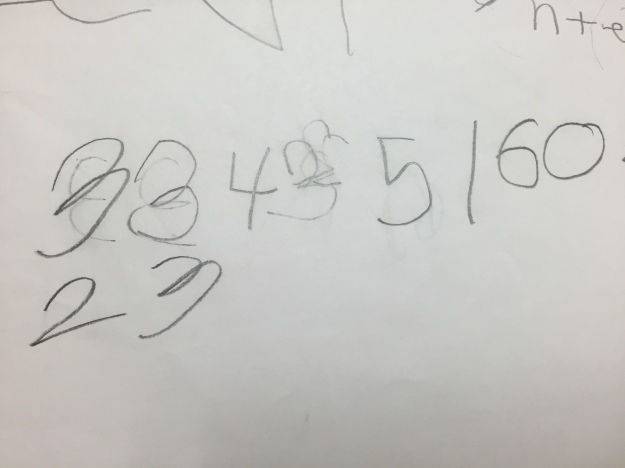
This group’s work is not quite as organized as the one above, but they definitely were showing a movement of a bunny. They believed they were finished at 6 and 0, as many did, which leads me to believe the commutative property feels like the same combination to them.
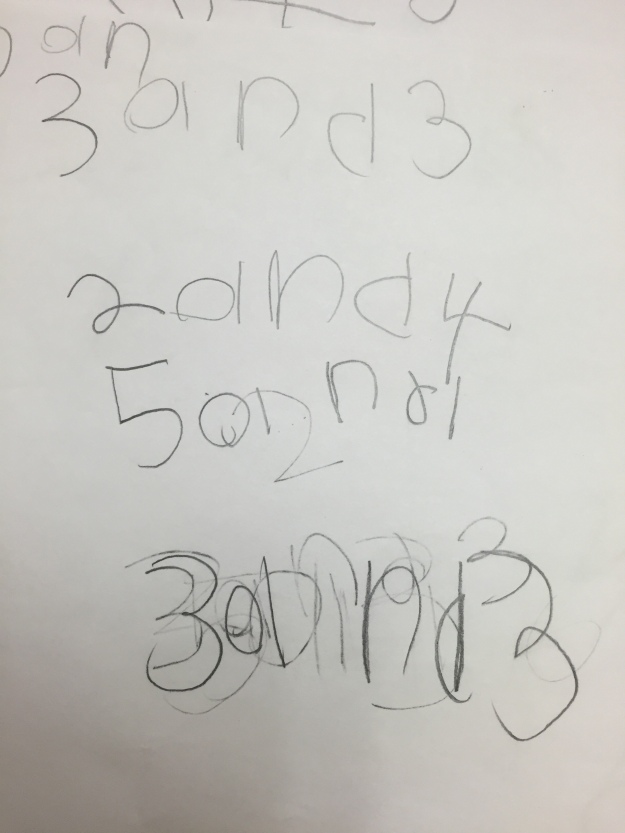
Again, had a pattern going and then jumped back to 3 and 3 after we asked them if they had all of the possible ways.


After walking around the room while they were working, we brought the students back to the carpet to talk about what they did. We started with 3 and 3 and I recorded it every single way I saw it being recorded. This is where I shifted from my initial goal of eliciting all of the combinations to the question,
How are these representations the same or different?
From here it was really nice to hear that “and” is the same as the adding because, “We had 3 and 3 more, so it is 6.” A lot of students easily connected the first and second examples above and we talked about how we could tell which bunnies were inside/outside. I didn’t ask which one was clearer to understand, for fear of making the students feel like their work wasn’t amazing, however the partners of the second example quickly said they could have written in and out over their numbers and it would have been the same. We ended by listing all of the combinations and the commutative property did come out from one group so we ended with them thinking about whether 6 and 0 was the same as 0 and 6.
Things I am left wondering…
- Should we have worked with an even number? As I walked around and began looking for any use of the commutative property, I began to wonder how I would have answered questions about 3 and 3. Technically it is the same exact equation, however in context, it would have been 3 different bunnies, so it is not. Would I have written 3+3 twice? I think I would have if the argument came up, but is that something to support in future work?
- From here, the students move to Toss The Chips. Do the red and yellow chips reinforce this work or without the context is it different? I know mathematically it can elicit the same discussions, but does the movement of the bunny (as something that moves itself) better support the conjectures of adjusting the addends? Does it not make a difference?
- I am so curious to see if the sharing of their organization structures transfer to their Toss the Chips activity. I would like to see them play the game without the table at first to see what they do with it!
- How does this thinking change with you play around with more than two addends? (I was so curious about this one that I planned an activity with a K teacher on just this question…that is my next post).









 MathMinds