Mathematizing Children’s Lit & Some of My Favorite Books: Kindergarten – 1st Grade

I had always been a fan of bringing stories into math class; however, as a fifth-grade teacher, it was hard to convince a group of almost–middle schoolers that a children’s book could be full of interesting, grade-level ideas to explore. More often than not, when I began reading aloud, I could tell right away that the vibe was off and that they saw it as too babyish.

At first, I assumed the problem was the book itself. Over time, though, as I learned more about mathematizing from Allison Hintz and Tony Smith, I came to realize that the issue wasn’t what I was reading, but how I was framing the experience. I was making the book’s concept the thing, rather than centering the story and the mathematical practices involved in mathematizing. And while the concept is extremely important when choosing a book, the facilitation really can make or break the experience.

Around that same time, I was incredibly fortunate to step into a role as a K–5 math specialist, where I had the opportunity to partner with an amazing reading specialist, Erin. Together, we tried out different books across grade levels and content areas, reflected on those experiences, and took up interactive read alouds as a way to blur the lines between content, habits of mind, and capacities. Through this work, I not only learned a great deal about teaching ELA, but also came to understand mathematizing as a way to invite students to see mathematics everywhere, including within stories that don’t appear to be mathy at all!

The Why

Mathematizing is a process of inquiring about, organizing, and constructing meaning with a mathematical lens (Fosnot & Dolk, 2001). Through mathematizing, students:

  • have access to mathematics
  • see math when and where it may not be obvious
  • see mathematics as a way to make sense of things
  • see math as a way of thinking, not solely a way of doing
  • focus on meaning-making

The What: Books

Choosing a Book

If you are a K-1 teacher, I am sure you already have an expansive book collection! As you look through your library, consider how different stories might invite mathematical thinking. Some books center math directly in the plot, others offer rich illustrations to examine, and some simply create situations that spark mathematical curiosity—even if the math lives quietly beneath the surface.

If you are having trouble choosing, I have highlighted some of my favorite books in the table below!

ConceptBook Suggestions
Counting and
Cardinality
I Spy a Dinosaur’s Eye by Jean Marzollo
Truman by Jean Reidy
Grumpy Bird
One Is a Snail, Ten Is a Crab by April Pulley Sayre & Jeff Sayre
Ten Black Dots by Donald Crews
Ten Flashing Fireflies by Philemon Sturges
Anno’s Counting Book by Mitsumasa Anno
Ten Ways to Hear Snow by Cathy Camper
One Fox by Kate Read
How Many? by Christopher Danielson
GeometryThis is a Ball by Beck & Matt Stanton
City Shapes
Square Cat by Elizabeth Schoonmaker
The Shape of Things by Dayle Ann Dodds
More-igami by Dori Kleber
Inch by Inch by Leo Lionni
Addition and
Subtraction
The Doorbell Rang by Pat Hutchins
There Is a Bird on Your Head by Mo Willems
Double Those Wheels by Nancy Raines Day
Composing Decomposing
Comparing Numbers
Lia & Luis: Who Has More? by Ana Crespo
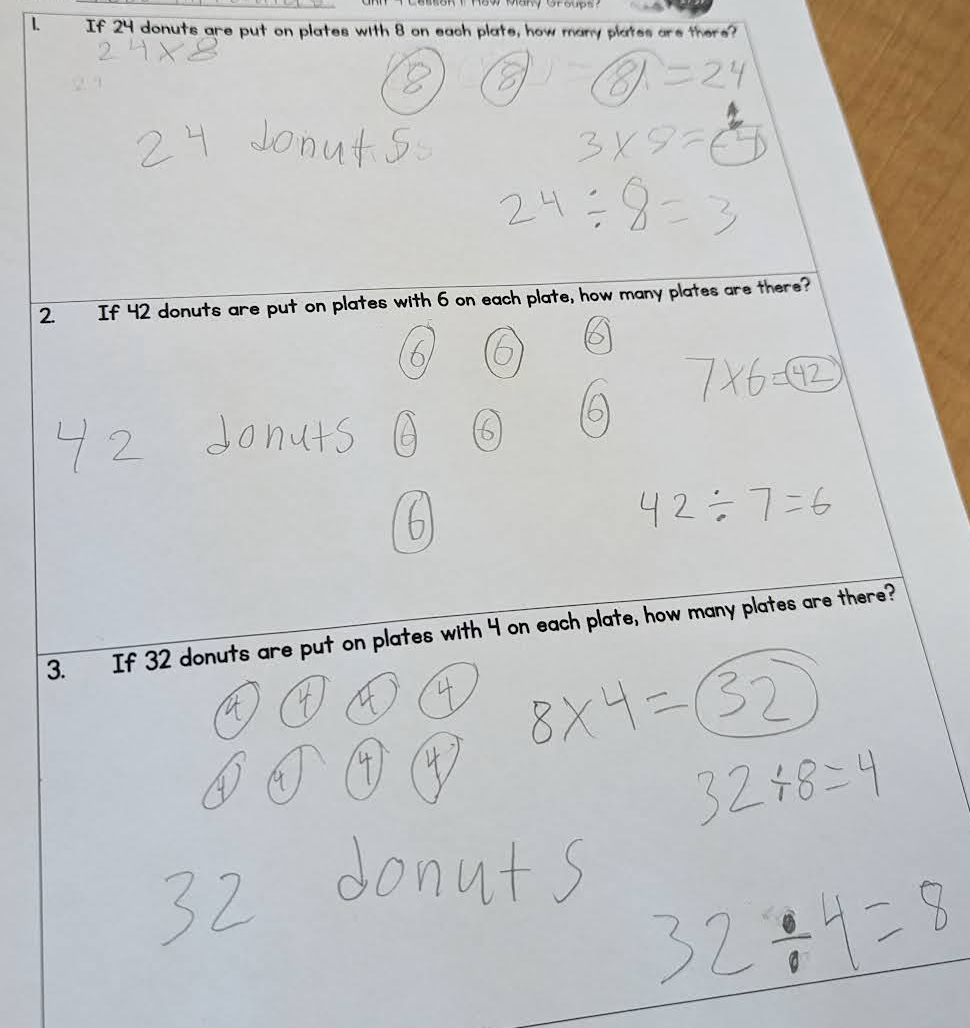
Dozens of Doughnuts by Carrie Finison (also great for counting & add/subtraction)
12 Ways to Get to 11 by Eve Merriam
Measurement
and Data
Curious Comparisons by Jorge Doneiger
The Animals Would Not Sleep! by Sara Levine
Other Lovely Books! Count on Me by Miguel Tanco
The Look Book by Tana Hoban
Playful Puzzles for Little Hands by Taro Gomi

The How: Interactive Read Aloud

Now that you have a book in mind, it is time to structure the read aloud experience. Don’t worry, there’s no single path for engaging students in a mathematical read aloud. Instead, think of it as a series of intentional moments that help students notice, wonder, build curiosity, and explore the mathematics within a story. Here are some helpful lessons learned that helped me improve in my interactive read alouds:

Let the story be the story. The first reading is an opportunity for students to listen, imagine, and enjoy. Without pausing to analyze, students can make sense of the narrative and build a shared experience around the text.

Listen closely to students’ thinking. After the reading, invite students to share what they noticed or wondered. Their ideas, mathematical or not, offer important windows into how they are making sense of the story. Recording these thoughts allows them to remain visible and valued.

Revisit the text. Returning to the story, or to particular pages, creates space to look more closely at the mathematics that emerged. This second look helps surface relationships, quantities, and structures that may have gone unnoticed the first time. Allison and Tony give great structures for planning this in their book and in the Supporting Materials section on that same page.

Honor students as question askers. While we should have an idea of the math we want students to engage in from the book, it is also extremely important to encourage students to pose their own mathematical questions inspired by the text. When students generate the questions, the mathematics feels purposeful and connected to their own thinking.

Create time to explore the math. Follow the read aloud with an activity that either emerges from students’ questions or deepens the ideas you want to highlight.

Conclusion

Ultimately, an interactive mathematical read aloud is less about following a script and more about encouraging sensemaking. The goal isn’t to squeeze math out of a book, but to create conditions where students naturally notice, question, and explore the mathematics already living in the pages. Over time, these intentional moments help students see math as something they do and make sense of, not just something that shows up in a textbook. Try one of these ideas in your next read aloud, and let me know how it goes, I’d love to hear what your students notice and wonder!

Examples

If you want to check out some examples before jumping right in, I have blogged about it a bit in these posts! Next time I will focus on some of my favorites in grades 2-5!
Math Journals as Formative Assessment

Whenever it snows, it feels so cozy inside that I just have the urge to read and write. And nothing inspires me more to write than student thinking. And there is no better place to see student thinking than in math journals!

When I was a classroom teacher, my fifth graders wrote in their math journals almost every single day. Sometimes they used them before a lesson to record estimates or predictions. Other times they wrote during class to capture their ideas as they worked through a problem. Often, they ended the lesson with a short prompt. No matter how the journals were used, they were always a safe, ungraded space for students to put their thinking on paper. And no matter the prompt, I learned something new every day about my students’ thinking simply by reading their entries.

Later, as a math specialist, I had the opportunity to see student writing in math classrooms across many grade levels, and it was so fascinating. I could see where it all begins in Kindergarten, when students are representing ideas with drawings and numbers, and how that thinking evolves through fifth grade as students’ written reasoning becomes lengthier and the prompts become more metacognitive. In every lesson I planned with teachers, we would build in a writing prompt. Those student responses, would always give us a new window into each student’s thinking.

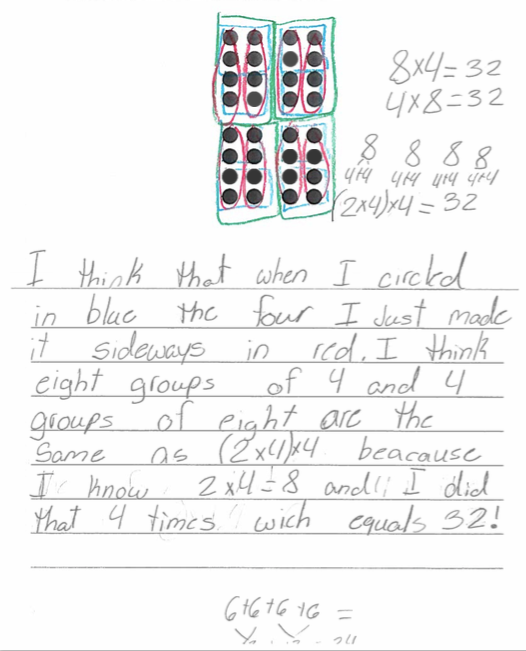
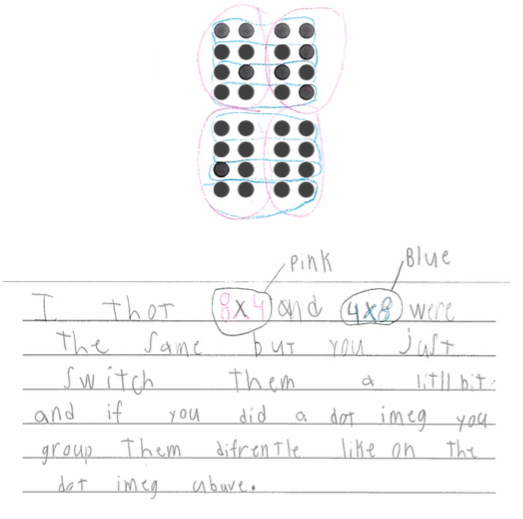
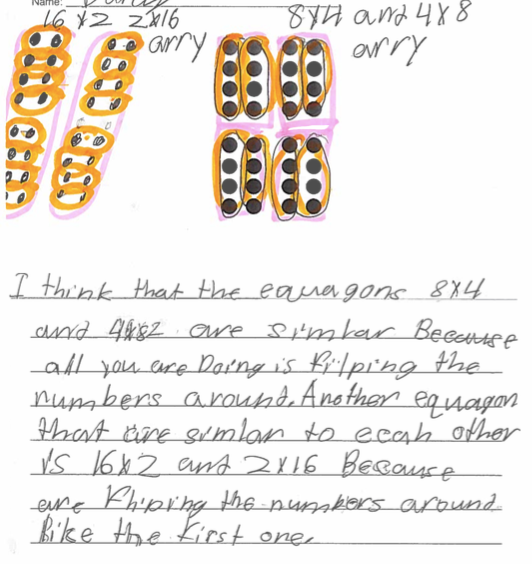
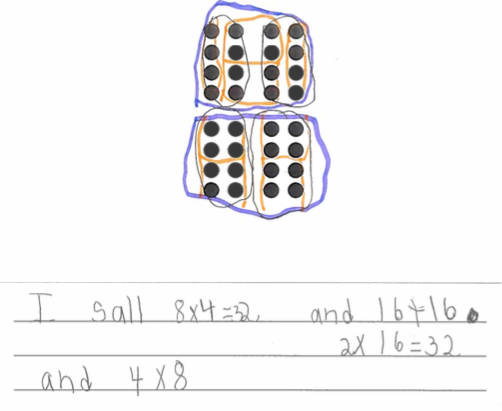
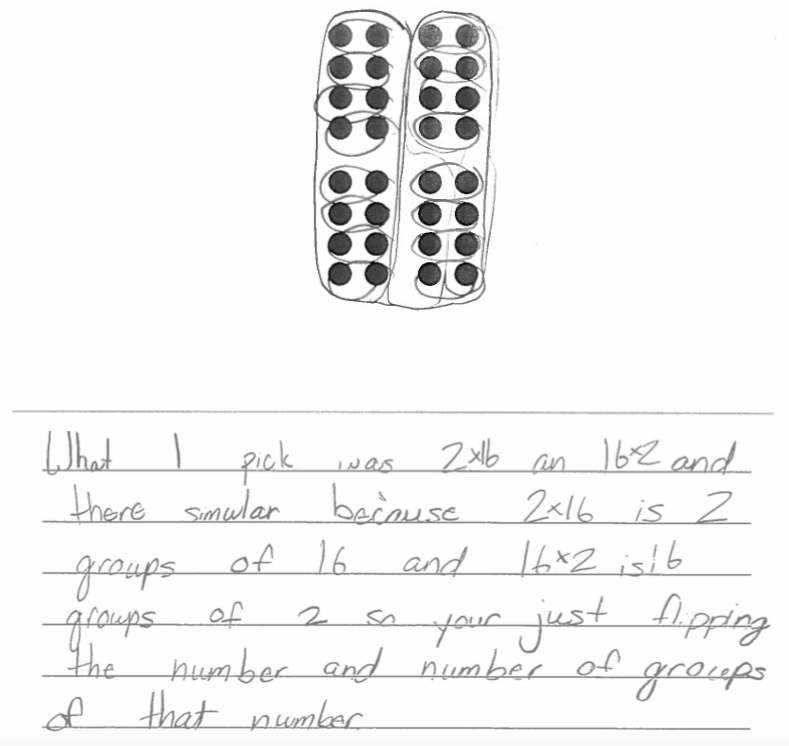
For example, when I planned a lesson on arrays with a third-grade team, we intentionally designed an exit prompt that went beyond a simple right-or-wrong answer. The lesson began with a Dot Image, and students spent the rest of the time building arrays and writing equations to represent them. At the end of the lesson, we returned to one of the dot images from the launch. Instead of asking students to write an equation, we asked them to choose two mathematical expressions that had been shared during the Dot Image discussion and explain how those expressions were the equivalent using the image.

When we later looked through the student journal responses, they became the anchor for our reflective conversation. Each journal entry revealed something a little different: how students were making sense of multiplication, the connections they were noticing, and where their thinking was still emerging.

Math journals don’t just show us what students can do; they offer a window into how students are thinking. Let’s take a closer look at some of that student work based on broader mathematical understandings.

The Commutative Property

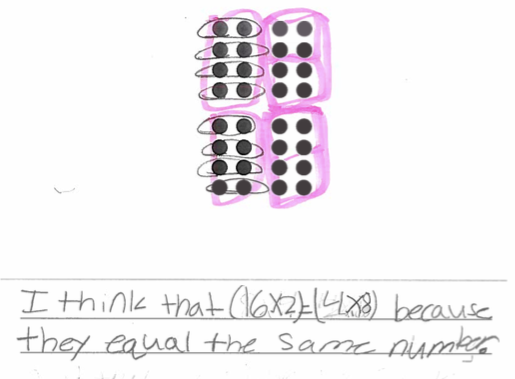
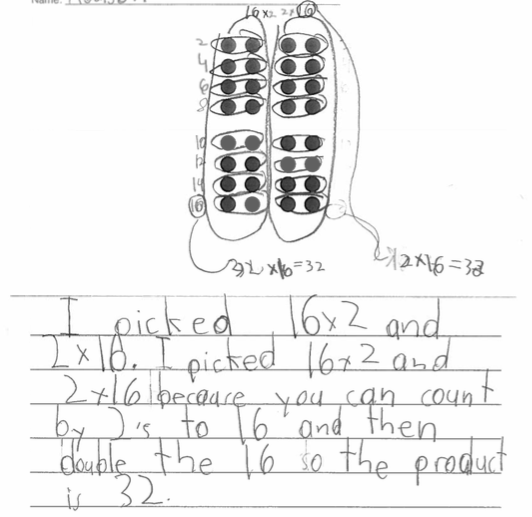
The majority of students chose two expressions demonstrating the commutative property of multiplication. Often students see that you can change the order of the numbers in a multiplication problem and the product remains the same, however in the journal entries, we were able to see student understanding of this property in a representation. 

16 x 2 = 2 x 16

8 x 4 = 4 x 8

16 x 2 = 2 x 16 and 4 x 8 = 8 x 4 

Changing the Number of Groups and Number in Each Group

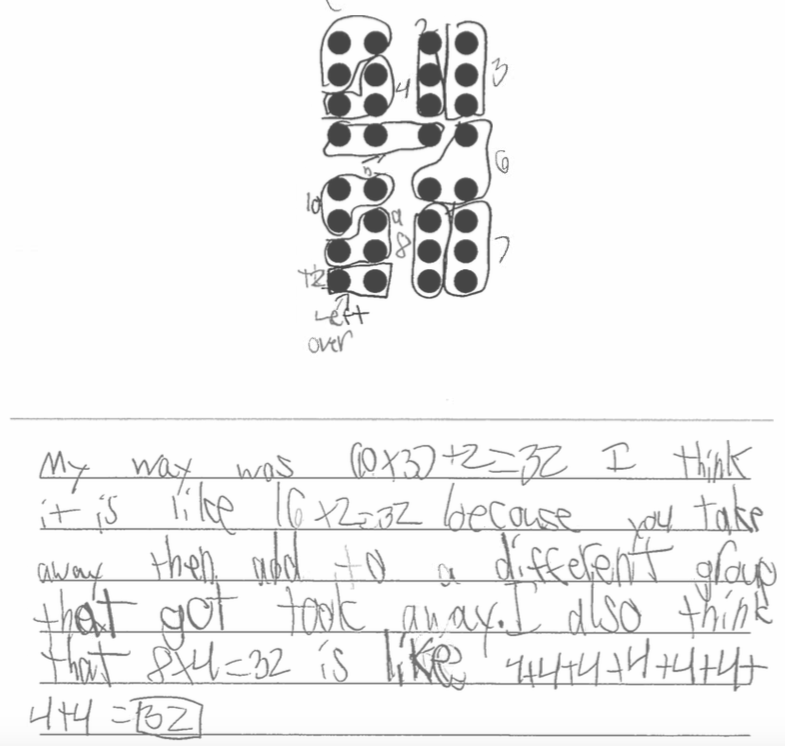
A few students noticed that when they changed the number of groups and the number of dots in each group, the product remained the same. While these students are not yet articulating how the groups are changing, this work provides a great opportunity to plan future conversations around this idea. 

Rearranging the Groups

This response is very similar to the previous responses, however this student is beginning to articulate how the groups are changing. Instead of having 10 groups of 3, the student explains he took some dots away and added them to another group to make 16 groups of 2. 

Relating Operations

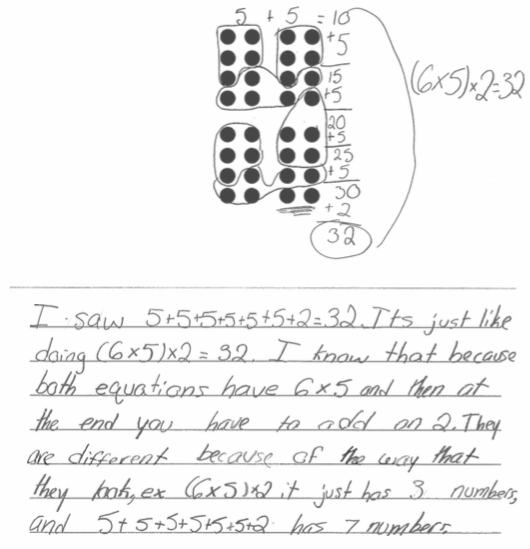
Some students related expressions based on what they understand about the operations and were able to represent these understandings in the dot image. 

While the team and I heard and observed so much interesting student thinking during the Dot Image discussion itself, the journal prompt allowed us to look more closely at each student’s understanding and see the connections they were making. It served as a important formative assessment, one that extended beyond what we could learn through discussion alone.

Math journals have transformed the way I listen to students’ thinking. I love seeing math journaling used across grade levels, from students who are just beginning to represent their ideas to those who are refining written explanations. Journals give students who may not feel comfortable sharing aloud a space for their voices to be heard, while giving teachers invaluable insight into how students are making sense of the mathematics. I encourage all math teachers to incorporate math journals into their classrooms—not just to see how students arrived at an answer, but to uncover the connections, understandings, and confusions that shape their learning. That insight truly informed every planning decision I made in my classroom and deepened my understanding of the not only the mathematics, but how students build mathematical understanding.

Now, off to make some more coffee, grab a good book, and then follow up with some Fortnite or Zelda gaming time:) Happy snowy Sunday all!

Adapting Lessons Part 2: Structuring Group Work

Just like the launch of a lesson shapes how students access the mathematics, the structures we use during group work support what they do once they’re in it. In these moments, who talks, who listens, and whose ideas move the work forward can either widen or narrow the thinking that happens. Group time can be a place where rich, collaborative work happens, but it involves much more from the teacher than giving the directions ‘work with your group,’ ‘turn and talk,’ or ‘think pair share.’ While a curriculum can provide teachers with helpful suggestions, the uniqueness of each group of students places the responsibility heavily on the teacher, which makes sense. Only the teacher knows their students and the dynamics within each small group. Small shifts in how we organize students, position their ideas, and support their discussions can dramatically impact both the mathematical practices that students engage in as they work and the mathematical thinking that students bring to the whole group discussion afterward. 

After exploring ways to launch a lesson, the next opportunity for quick, high-leverage adaptations comes when students begin working together. From the moment we ask students to collaborate to the moment when we circulate and listen, the structures we choose can either uncover students’ thinking or unintentionally limit it. Thoughtful approaches to group work can support collaboration, build mathematical habits of mind, and strengthen the sense of community we hope to see in our classrooms. In this post, we’ll look at quick, in-the-moment ways to support group work so every student has an opportunity to contribute and every idea has a chance to surface.

Alternate Ways to Work in Groups

Instructional Challenges: When students jump into group work without clear structures for talking and listening, it becomes easy for one person’s ideas to dominate while others disengage. Without intentional support, some students simply “go along” with the loudest or quickest thinker, and opportunities for deeper reasoning are lost. Additionally, when students stay in the same assigned seats, groups can become static. While this consistency can help early in the year as a community is forming, it can also limit the range of perspectives and mathematical ideas students encounter over time.

Each of these routines require students to articulate their ideas and listen to the ideas of others. One routine I love to support these practices is Talking Points. It didn’t really fit with the others in the table, but I wanted to mention it here as I close out the post. This routine includes giving each group a carefully crafted statement (for example, a prompt about multiplication or division), and asking students to respond by agreeing, disagreeing, or saying they’re unsure while explaining why. Because everyone at the table gets a chance to voice their ideas, and then they collectively wrestle with different perspectives, students often reconsider or deepen their understanding about the topic at hand. Finally, when the groups come back together for a whole-class reflection, all students benefit from a wide array of reasoning. I have a collection of blogs about Talking Points  in the K-5 math classes here if you are interested in trying them out! 

Try it!

In your next PLC or planning session, review the activities in an upcoming lesson. As you read through each problem, discuss:

  • What questions should I ask students to discuss in small groups that will move their thinking toward the mathematical goal of the day?
  • What structures can I use to ensure all students have the opportunity to share their ideas and have their ideas heard by others in the class? 
  • Which of the four group work structures will you use to support students as they learn together?*

*If you’re planning with your grade-level team, each person can try a different structure and then compare the affordances of each. I’d love to see what you try! Share your ideas in the comments or on IG (@kgraymath)!

Next up will be routines for supporting student learning as they engage in problem contexts, in particularly word problem sense-making strategies.

Slow Reveal Graph / Problem Posing Mashup

I have always loved, loved, loved Jenna’s Slow Reveal Graphs! They provide such an engaging structure that encourages students to explore and reason about data. If you don’t know what Slow Reveal Graphs are, it might be helpful to read up on them here before continuing.

Sense-making is so front and center in a slow reveal activity that I think it could be interesting and exciting to extend this activity with problem posing! I have been learned so much about problem posing from my friend Jinfa Cai. Problem posing is an instructional approach in which students generate and solve their own mathematical problems. In doing so, students share mathematical authority in the classroom and position students as creators of mathematical inquiry rather than solely recipients. I wrote a bit about it in the new NCTM book, Teaching Mathematics Through Problem Solving (pg 73-74).

The Mashup

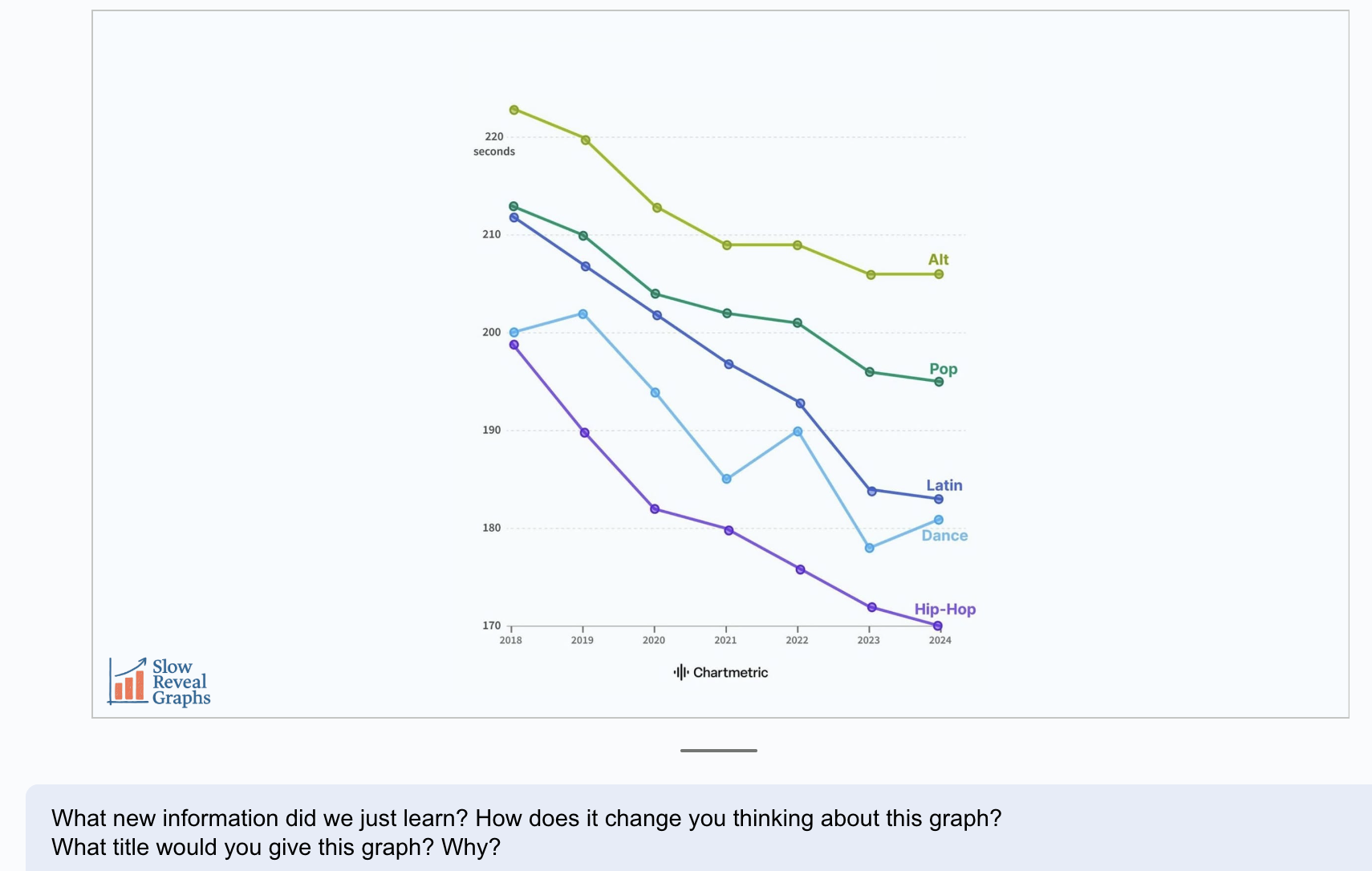
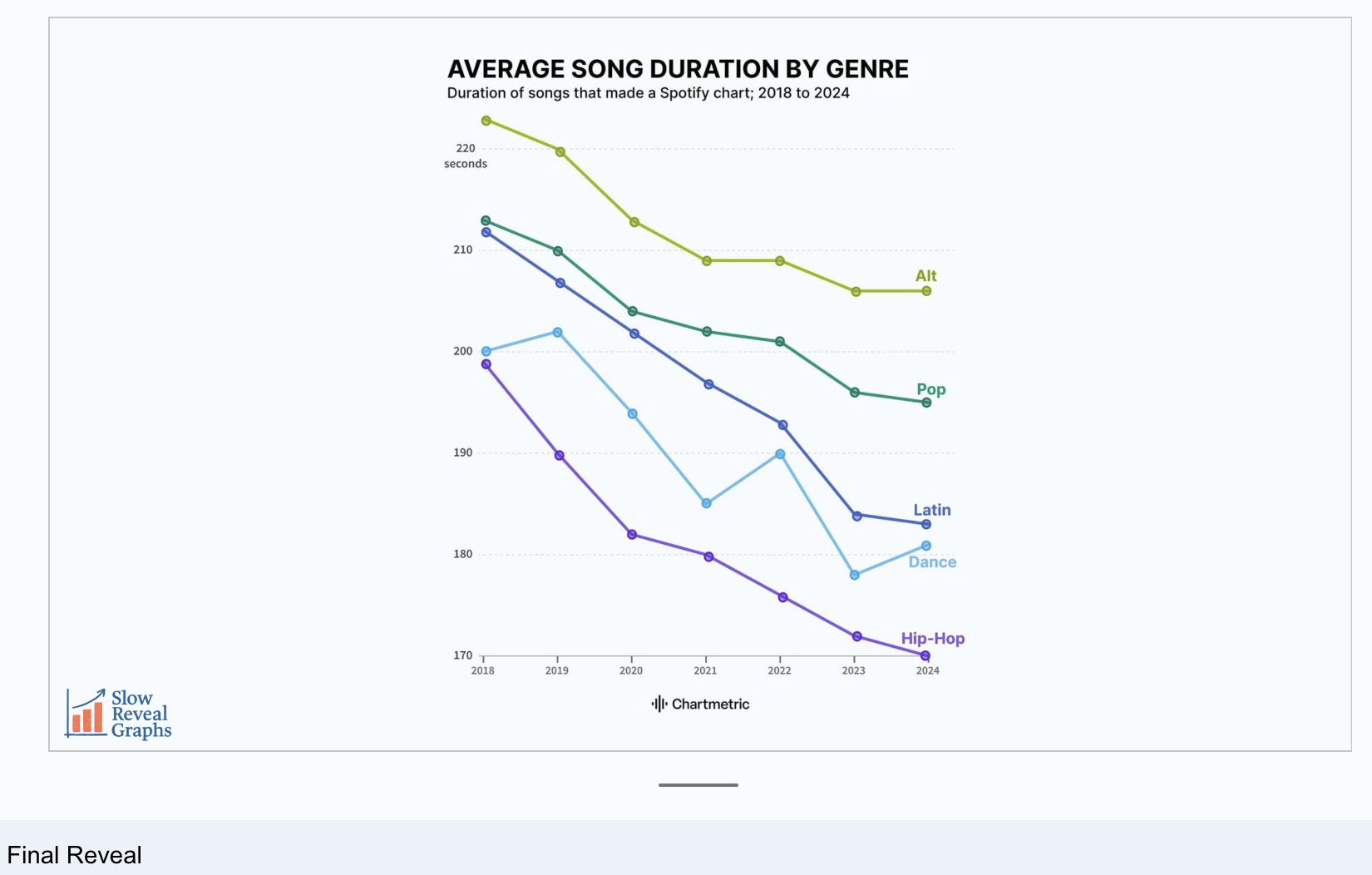
To think about what a mashup could look like, let’s go check out one of Jenna’s recent slow reveal graphs, Average Song Length by Genre. Which is so appropriate because Jenna and I love to chat 90’s hip hop artists;) Oh, and did I mention that Jenna creates a slide deck with notes for each one of these?!?

Step 1: Display the graph and ask students what they notice and wonder. (Slide 1)

Step 2: Display the graph with new information, ask questions that encourage students to interpret the new information, and make predictions about what is still missing…luckily, these directions are in the slide notes of Jenna’s slides. (Slides 2-3)

Step 3: Display the final reveal of the graph. (Slide 4)

Step 4: Problem posing: Ask students to pose problems that can be answered by information in the graph and record them on a piece of chart paper.

Students might pose many different types of problems such as:

  1. Which genre had the longest average song in 2019?
  2. About how much longer was the average latin song than hip-hop song in 2023?
  3. About how much did the average pop song duration decrease from 2019 to 2024?
  4. Which genre had an increase in average song duration? Between what years?
  5. If you listened to a dance song and alternative song in 2022, about how many seconds would you be listening? How many minutes?

This list could go on and on, but you get the point. I know it could be nerve-racking to use a graph like this because there are not definite values at every point, but I think that actually increases the reasoning element and could raise some cool points for argumentation!

Step 5: Ask students to solve their problems.

This is a choose your own adventure — you could ask students to solve all of the generated problems or you could focus attention on one or two problems aligned to that day’s learning goal. I always lean toward the latter so the activity isn’t just a one-off random activity, but instead connected to what they are learning. This also leaves me a bank of ‘if you get done early‘ problems, which was always one of the biggest differentiation challenges for me, and helps me focus the whole group discussion afterwards.

Step 6: Synthesize the learning.

This step is really dependent on the learning goal of the day. After solving, you could have students do a gallery walk to compare solutions and solution methods, representations, and reasoning. Or you could decide to have a whole group discussion based on the monitoring that you did as students worked.

I have always been such a fan of numberless word problems, notice/wonder, and the 3 Reads MLR. Problem-posing feels like it pulls the most purposeful parts of each of these routines into one. Layering problem posing on Jenna’s slow reveal structure puts such an fantastic focus on data while also supporting other areas of mathematical focus. It is also so adaptable by grade level, which makes it so flexible!

Final Problem Posing Thoughts

When students have the opportunity to pose their own mathematical problems based on a situation, they must make sense of the constraints and conditions from the given information to build connections between their existing understanding and a new understanding of related mathematical ideas (Cai, 2022). And when teachers have the opportunity to listen to connections students make, understand the math students see in situations, and make teaching decisions on how to elicit, share, and move forward with student thinking, it shares the mathematical authority in the classroom and leads to deeper, more powerful learning for all!

I have blogged a bit about problem-posing if you are interested in learning more: https://kgmathminds.com/2023/09/23/embedding-problem-posing-in-curriculum-materials/ and https://kgmathminds.com/2023/05/06/problem-posing-fun-in-fourth/.

Formatively Assessing Student Thinking

At the beginning and end of a curriculum unit, I find it valuable to learn what students already know and what questions they have, to help guide my planning and instruction. While pre- and post-assessments can provide useful information, they also tend to limit the range of students’ thinking, especially when students show minimal written work. Because of this, I began using a few key routines. One of these routines, which I call “Tell me everything you know and want to know about [topic],” invites students to share their ideas more openly.

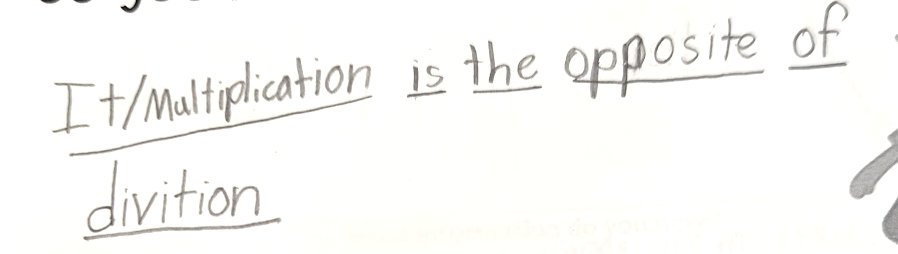
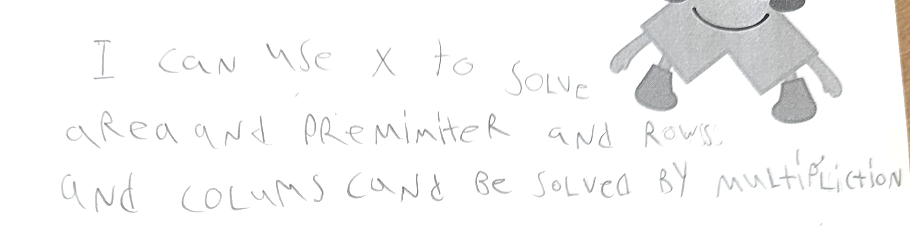
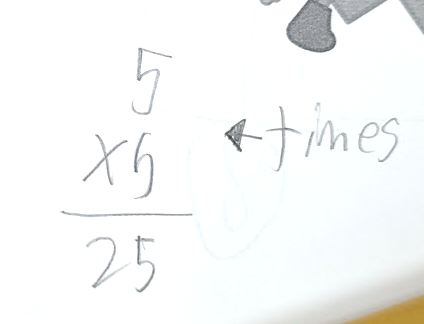
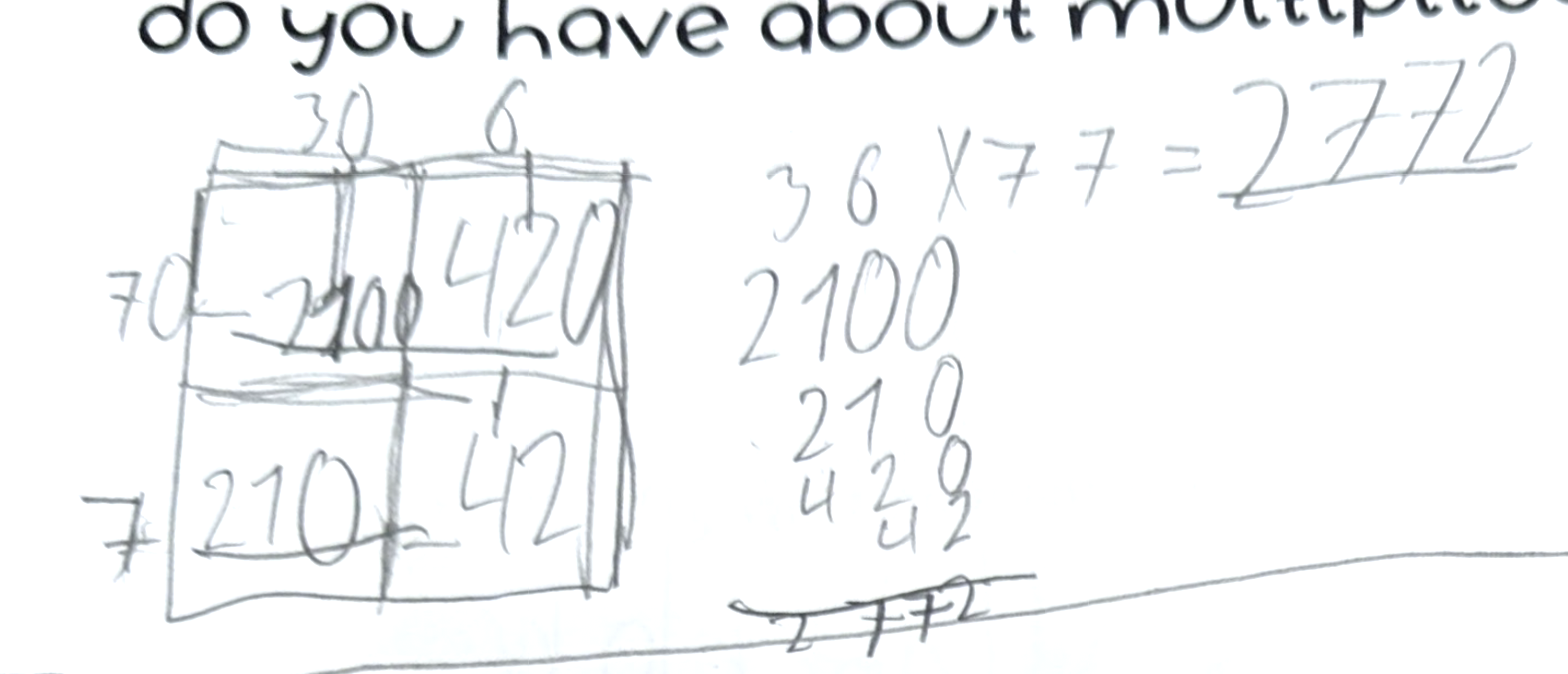
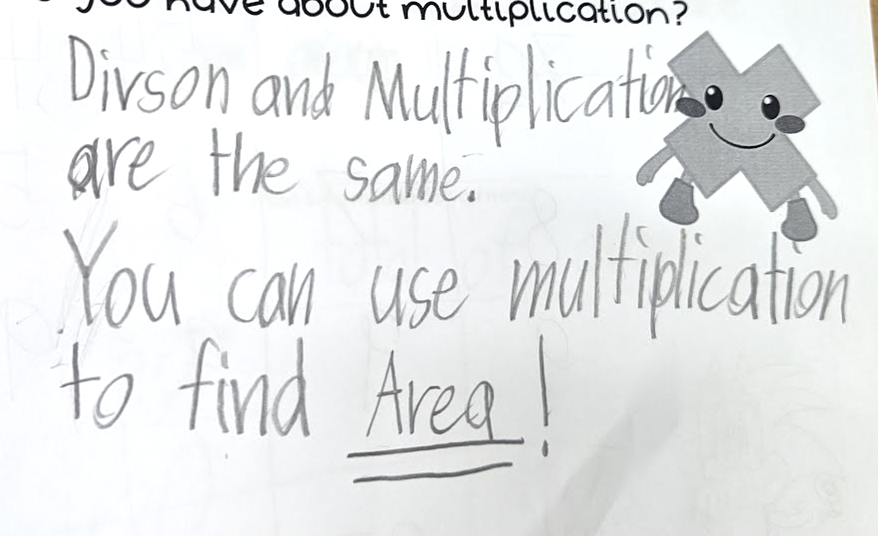
For example, after a 3rd grade unit on multiplication and division, Katie (an amazing 3rd grade teacher) and I wanted to gain insight into what students learned, in their own words. We wanted to give them some individual think time first, so we gave them this simple sheet to record their ideas. We decided to leave the page unlined so students could freely draw any representations that made sense to them. Their ideas definitely did not disappoint! (Click on each thumbnail to see the full page)

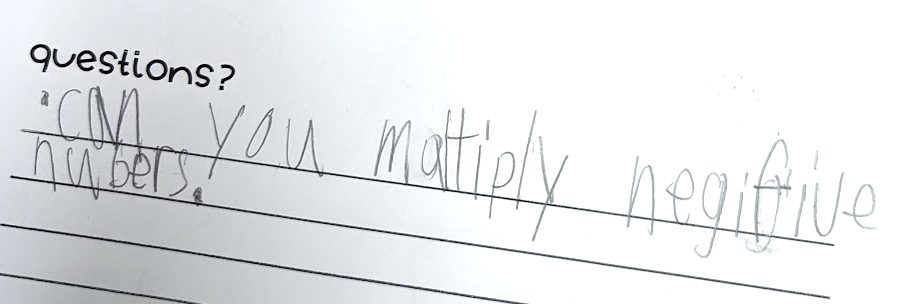
We only got one question, but it was such an interesting one!

I think since it was the first time doing this routine at the end of a unit, we didn’t get as many questions as we had hoped. I do wonder how changes in wording such as “What new questions do you have about multiplication?” or “What wonderings do you have about multiplication?” would impact the amount of questions we would get next time.

After students had their independent think time, we shared their responses as a whole class and recorded their ideas on chart paper to stay up as an anchor chart we could refer back to throughout the year!

If you would like to try this routine before the holidays to see what students have learned, I blogged the directions here. In my next blog post, I will explore another routine I love to formatively assess student thinking! Until then, I would love to hear some of your favorites in the comments!

Making Sense of Word Problems

I am sure we have all seen it happen at one time or another in math class. We give a student a story problem to solve and after a quick skim, the student pulls the numbers from the problem, computes them, and writes down an answer. 

If the answer is correct, we assume the student has a grasp of the concept. However, if it’s incorrect, we’re left with a laundry list of questions: Do they realize their answer doesn’t make sense? Did they not understand the context? Did they simply pull the numbers and operate to be finished or did they truly not know what to do with them? Most importantly, we ask ourselves, how can I help students make sense of what they are reading and think about the sensibility of their answer in the context of the problem?

If we’re lucky, we can identify a mathematical misconception and work with that. Oftentimes, though, the answer isn’t even reasonable. Then what do we do?

This scenario has me reflecting on the Common Core Standard of Mathematical Practice 1:

Mathematically proficient students start by explaining to themselves the meaning of a problem and looking for entry points to its solution. They analyze givens, constraints, relationships, and goals. They make conjectures about the form and meaning of the solution and plan a solution pathway rather than simply jumping into a solution attempt. 

The best way I’ve found to help students make sense of what a problem is asking is, ironically, to take the question out altogether. Inspired by the wonderful folks at The Math Forum, I do a lot of noticing and wondering with students in this fashion. Most recently, after reading Brian Bushart’s awesome blog post, I have started taking the numbers out as well! Instead of students thinking about how they’re going to solve the problem as they read, they are truly thinking about the situation itself. It’s been an amazing way to give every student entry into a problem and allow me to differentiate for all of the learners in the classroom, while at the same time provide insight into my students’ mathematical understandings. 

Recently, I had the opportunity to work with a 3rd grade class. The class recently finished their multiplication and division unit and will soon be starting their work with fractions. In order for their teacher and I to see and hear how students apply the operations, make sense of contexts, and currently think about fractions,  I thought it would be interesting to take a story problem from their Student Activity Book and take the question and numbers out.

The Planning

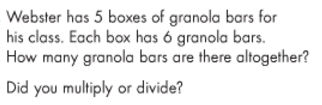
I chose the problem below and thought about what I would learn about a student’s mathematical understandings and sense-making after they answered the questions. 

I was curious to observe how students make sense of problems based on the idea of removing the numbers and the question so I changed the problem to this simple statement:

“Webster has boxes of granola bars to share with his class.”

I anticipated the students would wonder about the missing mathematical pieces involved in an open-ended statement like this. I believed their wonderings could lead them to develop questions that could be answered based on the very information they were wondering about. I knew the mathematical ideas of multiplication, division, and/or fractional sharing would arise and that I would learn so much more about their thinking then if I had given them the original problem.

In The Classroom:

I launched the lesson by posting the sentence on the board and recorded things they noticed and wondered. 

They noticed:

“We don’t know how many boxes of granola bars.”

“There is not enough information to know what is going on.”

“We don’t know if it is adding, subtracting, multiplying, or dividing.”

“There are multiple people in the class because it says boxes and share.”

They wondered:

“How many granola bars are in each box?”

“How many boxes he bought?”

“How many kids are in his class?”

“What kind of granola bars are they?”

Based on their noticings and wonderings, I felt everyone had a strong grasp of the context and sense of where this was going. Based on their noticing that there is not enough information to know what is going on, I asked what more they would want to know. They responded that they wanted the answers to the first three of their wonders: bars per box, number of boxes, and number of kids in the class. 

I asked them what questions they could answer if I gave them those pieces of information and they responded:  

How many bars does he have? 

How many bars does each kid get? 

How many does he have left?

At this point, I could have given them the information they wanted. However, I thought it would be so much cooler to allow them to choose that information for themselves. I was curious: how they would go about choosing their numbers! Would they strategize about the numbers to make it easier for themselves? Would they even think that far ahead? What would they do with the leftovers?

When I told them I was not giving them the information and that instead they were choosing their own numbers along with the question they wanted to answer, they were so excited! 

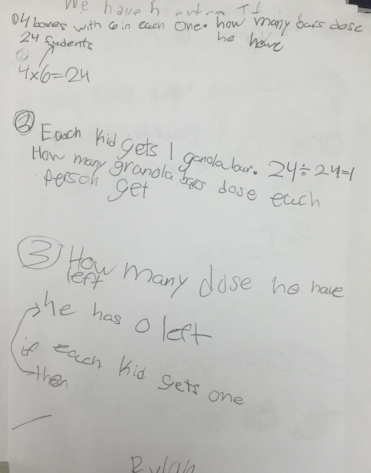
Some partners chose their numbers very strategically to make it easier for themselves. To me, this demonstrated a lot of sense-making and forethought of what was going to happen in their solution path. And as an added bonus, while only asked to answer one question, the group answered all three questions! (Teacher note: if students chose numbers strategically and therefore finished quickly, I gave them extra bars to factor into their problem to see how they dealt with the leftovers.)

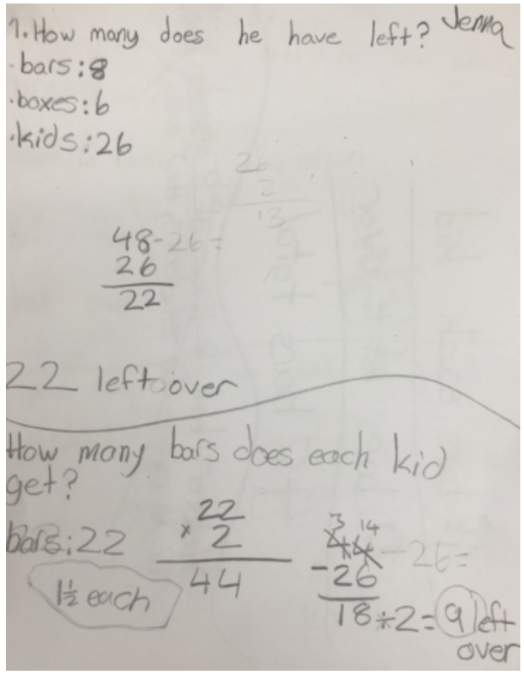
Other students chose the opposite route and strategically picked numbers to make it “harder for themselves.” Check out the way these two students showed strong reasoning and perseverance through division of numbers larger than any they’ve ever worked with. 

Others chose numbers without much forethought and dealt with some amazing leftovers. This was a great way to formatively assess students’ thinking related to fractions before they began that unit.

And then there are always the surprises. Who would have thought third graders would reason about the leftovers in terms of percentages?

Reflecting on what the students would have been asked to make sense of and the work they would have had to do based on the original problem versus the reasoning and work they did related to this one simple sentence, I’m amazed by the difference. I learned so much more about what each of the students know beyond simply multiplying 5 and 6. Taking out the numbers and question allowed every student to think about the meaning of the sentence, the implied mathematical connections, and plan a solution pathway before jumping into a solution attempt. 

I highly recommend everyone try this strategy with a word problem from your current text. It’s a wonderful way to give every student access to the math and freedom to think beyond just getting an answer. 

If you know me or have ever read my blog, you know I could talk for days about student math work! You can visit my blog for a more detailed description of the work shown in this post as well as additional work captured from the lesson.

Gallery Walks: Engaging Students in Other’s Ideas

One instructional strategy that I love for collaboration and public sharing of student ideas is a gallery walk. In a gallery walk, students create displays of their thinking on chart paper or white boards and then the small groups walk around the room and visit each other’s posters. And even though students create such beautiful displays of their ideas, it is always challenging for me to structure the walk in a way that actively engages them in one another’s ideas. Like any problem of practice, it takes trying out new ideas to see what works, when, and for whom.

The Lesson

Last week, it was the first 3rd grade lesson about division. We decided to launch by mathematizing Dozens of Doughnuts to set the stage for the subsequent activities. If you haven’t read the book before, it is about a bear named LouAnn who keeps baking 12 doughnuts to share with a different number of guests who arrive at her door. We read the book and did a notice and wonder, anticipating we would hear something about LouAnn sharing doughnuts and the number of doughnuts, friends, or plates, which we did.

Student Displays

We then asked small groups to record all they ways that LouAnn shared her doughnuts. We purposefully didn’t specify the representation so they could look for different ways during the gallery walk.

As we walked around it was great to see the various ways students were representing the situations, but some small groups seemed to have settled on only one way. We had planned for them to look for similar and different ways during the gallery walk, but that can be so passive, with no opportunity for them to connect those new ideas to their work. So, instead of waiting for the gallery walk at the end, we decided to engage them mid-activity with each other’s ideas and allow time for them to use those ideas.

Taking a page from Tracy’s book, Becoming the Math Teacher You Wish You Had, we opted for a Walk-Around to cross pollinate ideas. We asked students to walk around and look for ideas they wanted to add to their poster. These could be new ideas or just a different way of representing an idea they already had.

You would have thought we gave them a chance to ‘cheat’ as they walked around with such intention to other’s posters. I wish I had captured the before and afters of all of their posters, but here are just a few where you can see the new addition of ideas.

After they finished adding to their posters, we paused to discuss the ideas they found from others – both new ideas they hadn’t thought about and ideas they had, but were represented in different ways.

Next Activity

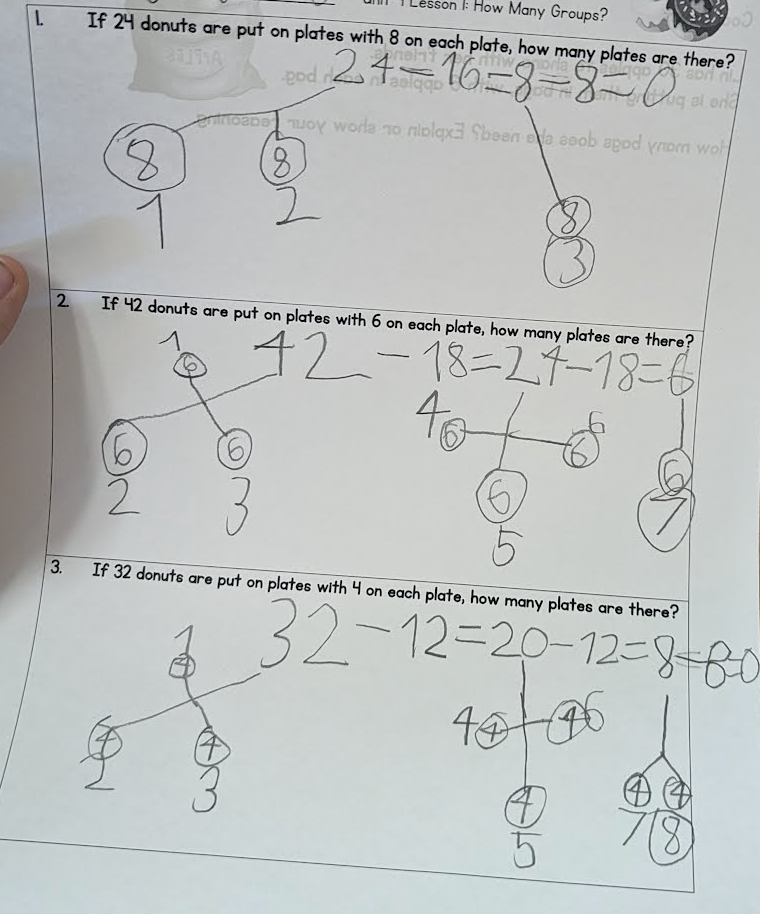
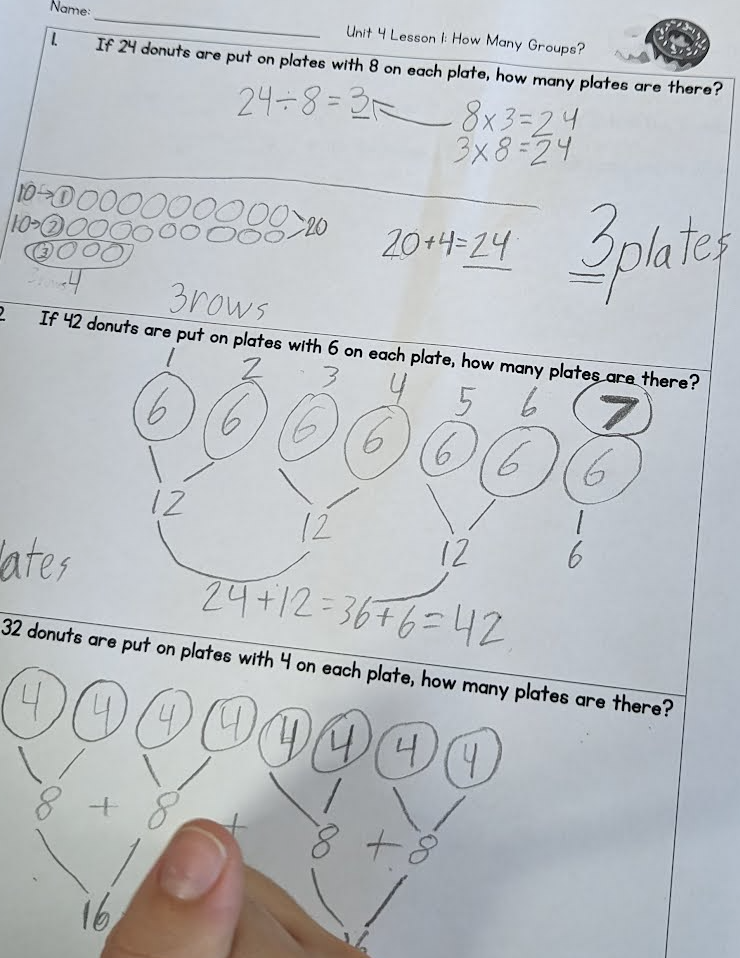
Students then independently solved a few problems. It was great to see the variation we saw on the posters in their work. So many great representations to share and connect in future lessons!

More Ideas and Resources

Want to learn more about mathematizing? Check out Allison and Tony’s book, Mathematizing Children’s Literature.

Want to read more mathematizing blog posts? I have written about some of the books I used when coaching K–5.

Want to share your children’s book ideas for math class? Join me on IG!

Extensions: Leave Students With More Questions

I appreciate the coherent connectedness of good curriculum when I see students making connections as they move through a unit concept. At the same time we know that no one learns the same thing, in the same way, at the same moment in time, so the need for additional time with a concept and extension opportunities are always a necessity. In our school, we typically address the additional time element during small group time, but extensions seem to be more of that ‘back pocket’ in-the-moment teaching move that is challenging and fun at the same time. We have to think quickly about the purpose of the extension problem/prompt and the quick question(s) to support students in moving forward in their thinking without a lot of back and forth because the lesson must keep moving for the rest of the class.

‘I’m finished, what do I do?’

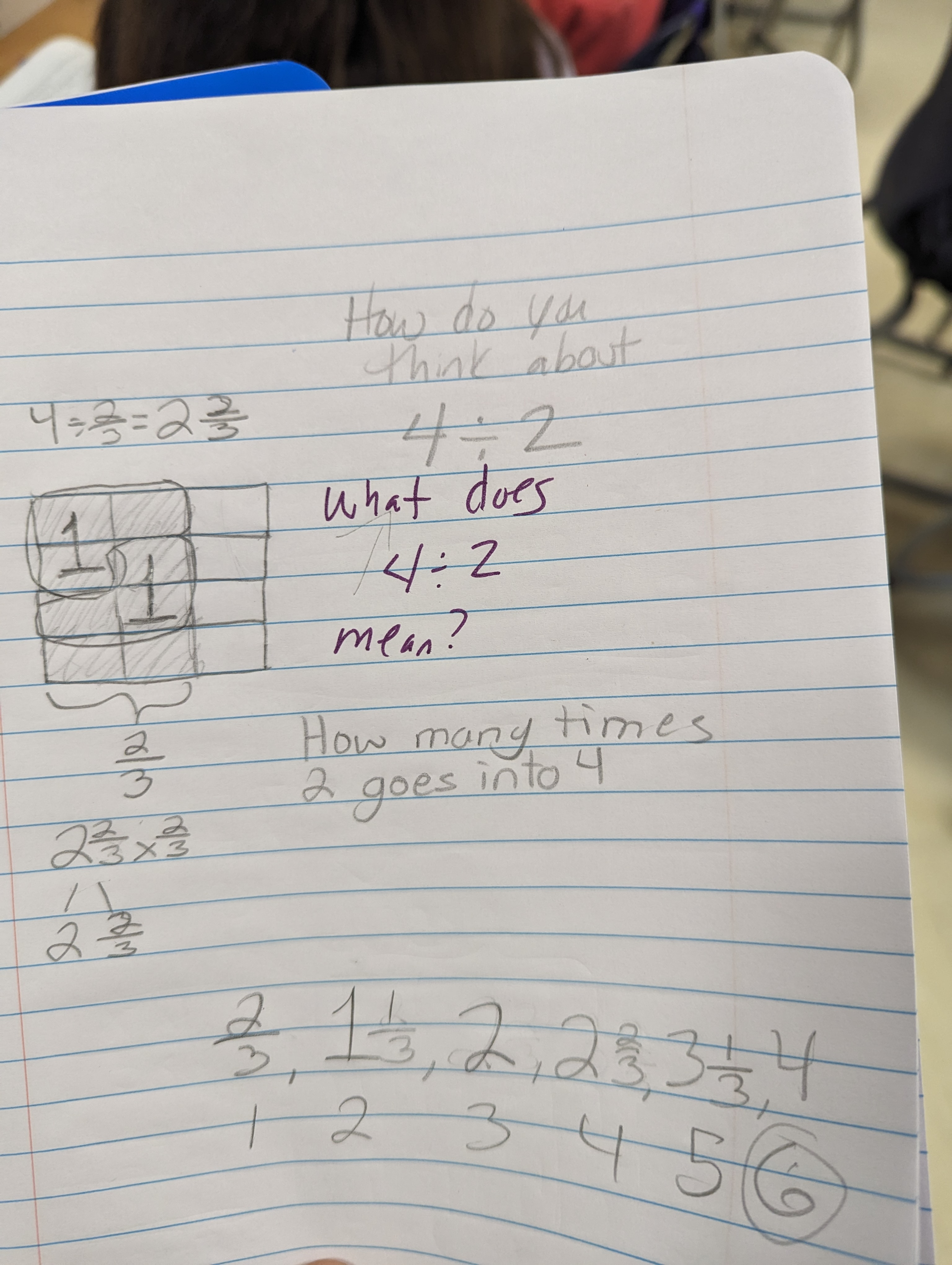
Our 5th grade class is finishing up their unit on fraction multiplication and are at the point of explaining the generalization of multiplying numerators and denominators. As I was monitoring the other day, I saw two students who quickly, and correctly, finished up and were waiting for the whole class discussion – I am sure we are all all too familiar with this scenario! I asked them to grab their math journals (highly recommend everyone has a journal) and quickly needed to come up with a problem. I had just come from our 5th grade PLC, during which we were planning for the upcoming fraction division unit by working through some 5th and 6th grade fraction problems and digging into the math as learners. Selfishly, I was curious to see how students approached one of the division problems we worked on. So, I ask them to try and solve 4 ÷ 2/3 .

Class ended and when I walked in the next day they couldn’t wait to talk to me about it. I mean, what is better than that? This is what they showed me at the start of class:

This is where I love curriculum coherence, but see the need for dropping novel problems in students’ laps to get them out of the mindset that all problems they do in this unit will be about that unit concept. While there is so much interesting thinking here, they automatically approached it like they would a fraction multiplication problem, which if they leveraged their understanding of division might have worked, but in this case they both were having the feeling that it wasn’t quite right.

‘Can you give me a hint?’

The lesson was starting but they wanted a hint. I needed a quick question I could write down and leave for them to revisit when they had time during the lesson. I tried, ‘How do you think about 4 ÷2?’ and got a questioning look, so I tried again with different wording. ‘What does 4 ÷ 2 mean?’. I saw a lightbulb as she wrote her answer so I went to the other student and dropped the same question.

‘Can that be right?’

They used repeated addition and skip counting to arrive at 6. They were so excited, but then one of them asked me how it can be 6 when that is more than 4 and they were dividing. I literally couldn’t have asked for a better question! As we ended class, I wrote the following string of problems on their papers for them to think about:

4 ÷ 4

4 ÷ 2

4 ÷ 1

4 ÷ 2/3

4 ÷ 1/2

The coolest thing was that as I was giving them these problems, other students wanted to get in on the action too!

To be continued when I go back into school this week…

Keeping Math Conversations Alive

Math routines are such a powerful tool for eliciting student ideas and making connections between them. The challenging part for me has always been ending them. Once I ask students for strategies or things they notice and wonder, the ideas are so uniquely interesting that I want to explore them all! However, when each idea can lead down a different path that may or may not be related to that day’s lesson, it is hard to know what to do in the moment. And the last thing I want to do is abandon the wonderful math ideas on the board.

Last week in 3rd grade we did a parallel choral count. Students counted by 2’s and then by 5’s as I recorded. I asked them to look for patterns they notice in either the individual counts or between the two. The lesson that followed was on multiplication, so the skip counting was helpful to lead into that lesson, but as more ideas started to emerge I found myself wondering where to go and what to do with all of these amazing ideas.

If you cannot follow my recording (how have I not gotten better at this after all these years:), here are some of the great math the students brought forward:

  • There are some of the same numbers in both counts, but in different locations.
  • All numbers in the 2 count are even and every other number in the 5 count is even.
  • The 5 count gets to a larger number faster than the 2 count.
  • Every number in the 2 count is the same number being added together – doubles.
  • In the 5 count, there are always 2 numbers with the same digit in the tens place.
  • At the top there is 2 + 5 = 7 and that is similar to the bottom row of 20 + 50 = 70
  • Even + even = even, odd + even = odd, and odd + odd = even
  • Someone added on that the bottom row is the same as 2×10 = 20 and 5×10 = 50

Every time I am in this situation I think about Joan Countryman’s book Writing to Learn Math. In there she describes math journals as a way to keep math conversations alive. That is exactly what I want to do with these ideas, keep them alive for more discussion. I am also a HUGE fan of math journaling, so I don’t need much of a nudge to use them!

Since we need the dry erase board for other things, the ideas cannot live forever on that board. I wondered about giving each student a copy of this picture to tape in their math journal. Then, when students finish up something early, they could find one of these ideas to explore further. I am thinking prompts like “The pattern I am exploring is…..” and “This pattern happens because….” might help students structure their explanations a bit.

Another idea that is more collaborative could be to replace an upcoming lesson warm-up with an idea from this count. We could display the picture on the board, highlight one of the patterns and ask students to work together to figure out why that pattern is happening and decide if they think it will always be true.

I would love to hear others’ ideas for not losing all the great math there is to explore in routines like this!

Problem Posing Fun in Fourth

Recently, I have been learning a lot about problem posing from my friend Jinfa Cai, in particular how to infuse these opportunities within the use of curriculum materials. Because, while there are rich problem solving experiences in a good curriculum, we do not often see explicit use of problem posing, especially in K–5. The Notice/Wonder routine is probably as close as it gets.

Since I am in classrooms this year, I get to try some problem posing around curriculum activities and follow up with Jinfa. As with all learning, the more things I try, the longer my list of questions for him grows! After last week’s lessons, I was left with two questions that I can’t wait to discuss:

  1. How do we honor all of the posed problems within the timing of a lesson?
  2. How do we infuse opportunities to reason about the problems that can and cannot be answered with the information in the situation?

The curriculum task

The lesson focused on addition of fractions with like denominators. As an adaptation to the curriculum materials, I only showed students the bolded part of the task and asked them to share things they noticed and wondered. Because their ideas were all falling into the ‘wonder’ column, I quickly pivoted to the problem posing work.

Problem-posing launch

In their journals, I asked students to take a couple of minutes to write mathematical problems they could pose about this situation. They shared their problems as a whole class and I recorded.

It was so interesting, yet not surprising, that they asked the exact same problem the curriculum task was posing! I had them work as a group to solve that problem and told them that if they finished before we came back together as a group, to re-read the other problems on the board to see if they could answer them as well.

Problem solutions

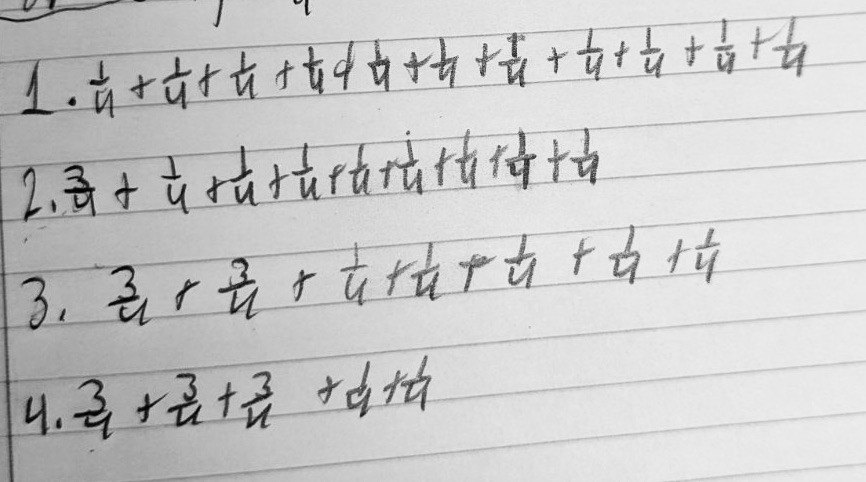
Students represented their solutions in many different ways as they leveraged their understanding of fractions, addition, and multiplication. It was particularly interesting that you could see in their work how they used one expression to derive subsequent ones. Here are a couple of examples:

Additional problems

As a whole group, we compared and connected student work like in the 2 examples above. Discussing questions such as:

  • Where are the ¼ cups in the expression? 
  • Where are the ¾ cups in the expression?
  • Where is one expression in the other?
  • How did knowing this expression help you with another?

At that point, our time for the lesson was over so I quickly went around and snapped pics of the problems they posed independently at the launch.

I saw so many interesting problems that didn’t get shared during the whole group time, which made me wonder how I could have done that better next time and led to my two wonderings:

  1. How do we honor all of the posed problems within the timing of a lesson?
  2. How do we infuse opportunities to reason about the problems that can and cannot be answered with the information in the situation?

Embedding problem-posing experiences in the curriculum and answering the teaching questions that arise is such powerful learning for both students and teachers.  When students have the opportunity to pose their own mathematical problems based on a situation, they must make sense of the constraints and conditions from the given information to build connections between their existing understanding and a new understanding of related mathematical ideas (Cai, 2022). And when teachers have the opportunity to listen to connections students make, understand the math students see in situations, and make teaching decisions on how to elicit, share, and move forward with student thinking, it shares the mathematical authority in the classroom and leads to deeper, more powerful learning for all.

The other exciting part, that I wish happened more often in general, is through these experiences, Jinfa and I continually learn how research can inform practice and how practice can inform future research.